
A binding guide for books and magazines
Binding decides whether a book survives three years of use or falls apart in the first six months. This is the comparison we give our publishing clients.
July 8, 2026
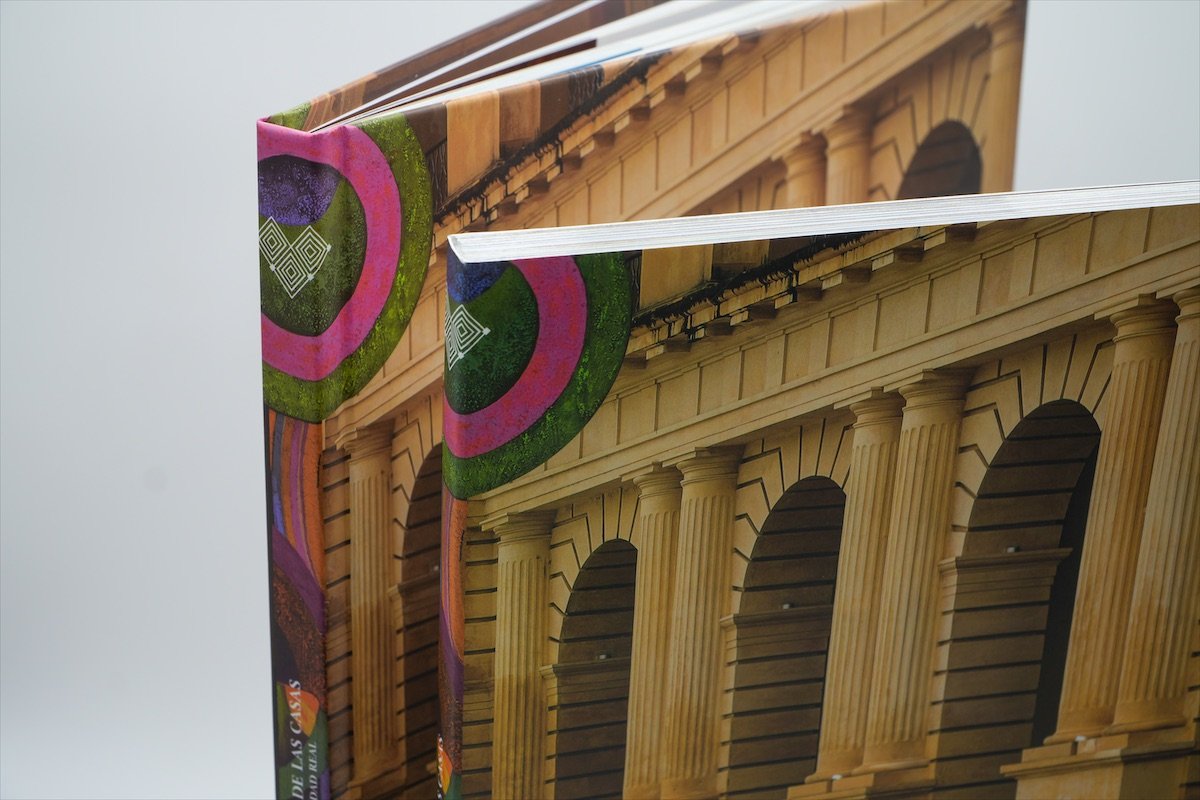
Saddle stitch
For publications from 8 to 64 pages. It is the most economical option and the only one that opens completely flat without effort. Its limit is real: past 64 pages the spine bulks, the fore-edge steps out and the centre pages creep beyond the trim.
Hotmelt (perfect binding)
The standard for thick magazines, catalogues and occasional-reference books, from 40 to 400 pages. It gives a square printable spine, which is what lets the title read on a shelf.
Its known weakness is cold and forced opening. Well-made hotmelt withstands normal use for years; opened flat to 180 degrees repeatedly, it gives.
PUR
Same principle as hotmelt but with reactive polyurethane adhesive. It resists three to four times more tension, tolerates difficult coated stocks and does not crystallise in cold. It is the right call when a book will be opened often or when the paper is heavy coated stock.
Thread sewing
Signatures are sewn with thread before being attached to the cover. It is the most durable binding available in industrial production and the only one that guarantees flat opening in a thick book.
It is justified for permanent reference works, art books, commemorative editions and any copy expected to last decades in a library.
Choosing, in one line
Under 64 pages, saddle stitch. Occasional use with a printable spine, hotmelt. Frequent opening or heavy coated stock, PUR. Decades of service life or mandatory flat opening, thread sewn.